

What I Actually Want
A dream food culture, and why Britain keeps missing it.

I’ve known Simon since we were both younger and considerably more caffeinated. Last week, he asked me what my dream food culture looks like. How I’d want people to interact with food. Whether there’s a country I admire. After a week of pondering, here’s where I got to.
If you've got an idea for something you'd like me to write about, drop me a message. I read everything.
My wife buys strawberries in winter. This drives me a little insane. Not because she’s wrong to want them — I like strawberries, everyone likes strawberries — but because a supermarket strawberry in November is a completely different fruit to the real thing. Pale, flavourless, a poor imitation wearing the right name. And the problem isn’t the strawberry. The problem is that if you’ve only ever eaten that version, you don’t know there’s another one. The ceiling comes down so slowly you don’t notice it dropping.
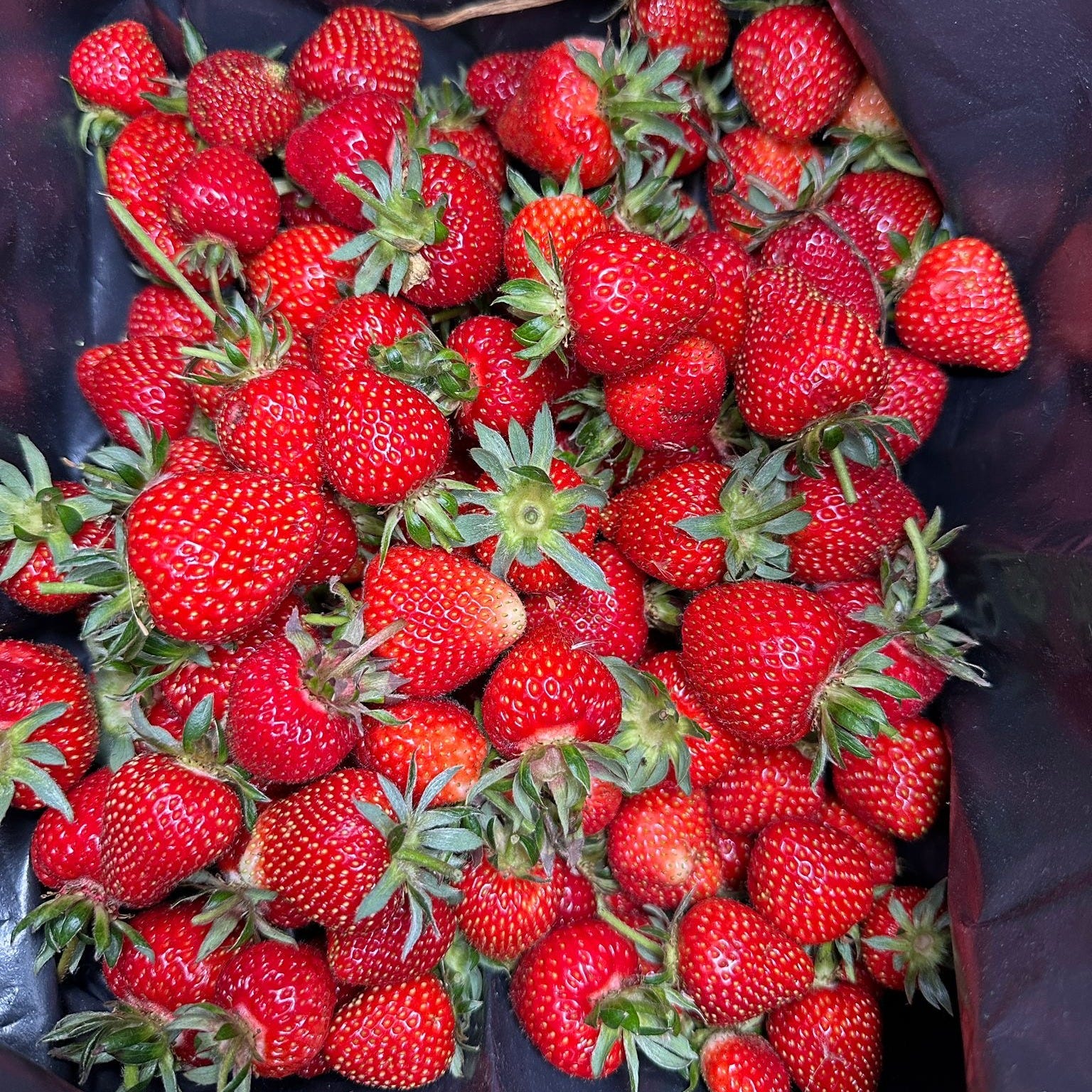
Supermarkets did that. Not maliciously — they gave people what they wanted, which was everything, always, regardless of season. But the cost was that we stopped understanding what food actually is. When it grows. Where it comes from. What it tastes like when it’s right. People now think, I want to make a particular dish, I’ll find a recipe, go to the supermarket, get the ingredients. Which is fine. But it’s backwards. The better version — the version I’d love to see more of — is you go to a market, you walk around, and you think, those tomatoes look incredible, I’m going to make something with them. Ingredient first. Dish second. That reversal is the beginning of a completely different relationship with food.
We have a complicated relationship with work in the UK — although I appreciate this is the pot calling the kettle black. Grind culture, hustle, the next big thing. How many people these days can confidently cook a meal without a recipe? How many people can open a fridge and make something simple and delicious from what’s there? The rate of play, the volume of work — it’s exonerated us from needing to be any good at feeding ourselves. So we order in, or we get a ready meal. Convenience filled the gap that energy used to occupy.
Of course, there are people working two or three jobs in this country who don’t have the time or the money to think about seasonal tomatoes. They need something hot and affordable and not eaten standing up. And this is where Britain has really let people down — not at the dizzying heights of fine dining, but in the middle, at the point where a functioning food culture would feed its working people something decent in the middle of a working day.
There was a worker’s lunch once. A plate made by someone who knew what they were doing, eaten at a table, at a price that didn’t require you to think twice. It’s almost gone. What replaced it is the meal deal. The desk sandwich. Eleven minutes between meetings, eating something that approximates food.
What a miserable life.
What I actually want is something much simpler than a food revolution. A great sandwich and a demi beer at lunch. A plate of stew in winter with a small glass of house red. At a table. Unhurried. At a price that doesn’t make you wince. The everyday luxury. The meal that doesn’t need to be an occasion to be worth having.
British restaurants can rarely offer that at an accessible price. The VAT, the rents, the wage floor, the rates — the heart of the place cost too much. So everything shifts upmarket to justify the overhead, the middle drops out, and lunch becomes either a treat or a sweaty sandwich. There’s no in between. And so people eat poorly, and quickly, cramming something crap at their desks, and the lunch hour becomes a punchline.
Take the lunch hour back. Eat the hot plate of food. Don’t break the bank. That’s the dream.
Simon asked if there’s a country I admire. A few, actually. But let me give you a specific night instead.
A couple of years ago I was in Greece, a small non-tourist town called Komotini, for a friend’s wedding. I went out to meet a few friends at 11pm and the cafés were full. Young people, older people, families. Drinking espresso, small beers, the odd aperitif. Nobody was egregiously drunk. Twenty-year-olds drinking coffee late into the evening, just having a nice time. Calm. Almost meditative. I stood there for a moment thinking, we don’t have this.
The British alternative to the pub is largely nothing. You go to the pub, or you go home. The idea of a café as a place to spend an evening — sober, sociable, in no particular hurry — doesn’t really exist here in the same way. We never built it. Or we built Wetherspoons instead, which is a different thing entirely.
Spain, Portugal, France, Greece — what they share isn’t cheaper food. Relative to local wages, eating out in Lisbon or Valencia actually costs a comparable slice of income to Bristol or London. What they have is a different set of priorities. The three-generation Sunday lunch isn’t affordable because restaurants are cheap. It’s normal because the culture decided it was worth doing. We didn’t make that decision. Or we made a different one, without realising the consequences.
Part of why those restaurants can hold that place in a community is that the people working in them are considered to be doing something worth doing. The profession has weight. When the job has status, the food gets status, and the room becomes somewhere people want to be, not just somewhere they go when there's something to celebrate. That’s a longer argument for another piece. But it’s not unrelated to any of this.
So. The dream.
A country that knows what a strawberry tastes like in July and has the patience to wait for it. A worker’s lunch that exists and is worth eating. A neighbourhood restaurant that knows your order. A café open at eleven at night where nobody needs to be drunk to justify being there.
A beautiful dream.
Since I moved to South Africa it’s mostly like this.
Produce is mostly seasonal.
You don’t have blood oranges year round.
It’s caused a big shift in the way I do things. I appreciate your perspective of the food (in season) before the recipe.
I love this Dan. And I share your vision of a culture that valued to simple but excellent over the abundant and rapid.